

Northern Cyprus usually presents its secular side: beach clubs, casinos, international investors—an island on the rise.
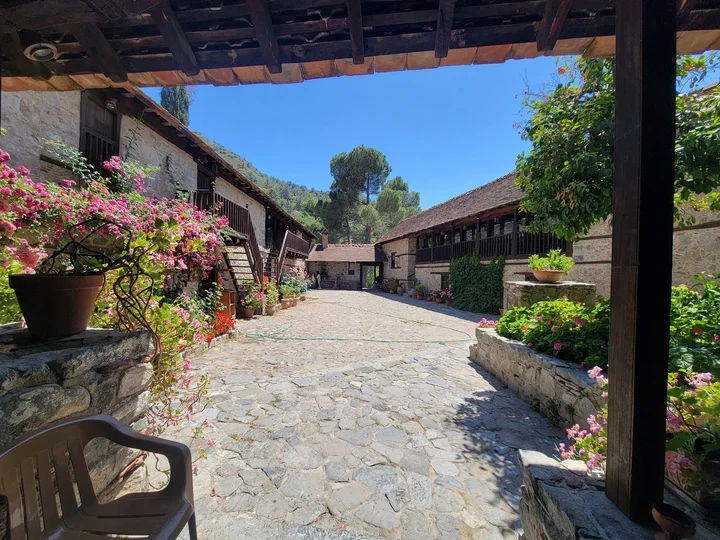
But away from the coast, in an unassuming little town inland, a completely different side of this island lies hidden—quieter, older, and of great significance to many people around the world.
A sheikh from Larnaca
Muhammad Nazım Adil al-Qubrusi al-Haqqani was born in Larnaca in 1922 into a family with deep roots in Sufism—on his father’s side, with ties to the founder of the Qadiri Order, and on his mother’s side, to Rumi, the founder of the Mevlevi Order.
Even as a child, he accompanied his grandfather—a sheikh of the Kadiri Order—to his religious gatherings. In 1940, he began studying chemistry in Istanbul—but his true quest lay elsewhere: the Naqshbandi Order, the Arabic language, and Islamic law.
The Path to the Grand Sheikh
In 1945, he found his spiritual teacher in Damascus: Abdullah ad-Dagestani, a sheikh of the Naqshbandi Order. Nazım remained his student for nearly three decades, until he was officially appointed his successor in 1973—Grand Sheikh of the Naqshbandi-Haqqani Order.
From that moment on, a remarkable development began: Under his leadership, the order grew into one of the most active Sufi movements in the world, with thousands of followers not only in the Middle East but also in Western Europe and the United States.
Lefke Becomes the Center of the World
The center of his life—and, to this day, the Order’s headquarters—was and remains Lefke, a quiet little town in western Northern Cyprus.
Before his death, thousands of people from all over the world visited his dergah—the order’s headquarters in Lefke—every month to attend his teaching sessions or simply to be near him. According to estimates, the order had about one million followers worldwide, several thousand of them in Germany alone.
A small town in Northern Cyprus that has become a spiritual anchor for people on several continents.
A legacy that lives on
Sheikh Nazım died in Lefkoşa in 2014 at the age of 92. He was laid to rest in his own dergah in Lefke—the place where he had taught and welcomed visitors for decades.
To this day, the town remains a destination for pilgrims and visitors from all over the world. Anyone driving through Lefke sees little of this at first glance—and that is precisely what makes this place so special. No hustle and bustle, no show. Just a quiet courtyard that continues to attract people seeking something beyond the visible.
Traces that go back even further
Sheikh Nazım is not alone in this. He is part of a larger, often overlooked chapter in the island's history: its Ottoman and Islamic heritage.
In Nicosia, the Gothic St. Sophia Cathedral was converted into the Selimiye Mosque following the Ottoman conquest in 1571. In Famagusta, St. Nicholas Cathedral suffered the same fate and was converted into the Lala Mustafa Pasha Mosque. The Büyük Han in Nicosia, once an Ottoman caravanserai, still bears witness today to the trade and exchange of that era.
Centuries of Islamic history, etched into buildings that today stand at the heart of the island’s everyday tourist life—mostly unnoticed by those who pass by.
Two Northern Cypruses Side by Side
Today's Northern Cyprus presents itself as cosmopolitan, secular, and Western-oriented—an island that is focused on international investors, resorts, and a modern lifestyle.
And yet, barely visible but undiminished, this other Northern Cyprus continues to exist: the one with mosques in old cathedrals, caravanserais, and the quiet dergah in Lefke.
Both are part of this island. Not as a contradiction, but as two layers of the same story—one loud and visible, the other quiet, yet of lasting significance to many people around the world.