

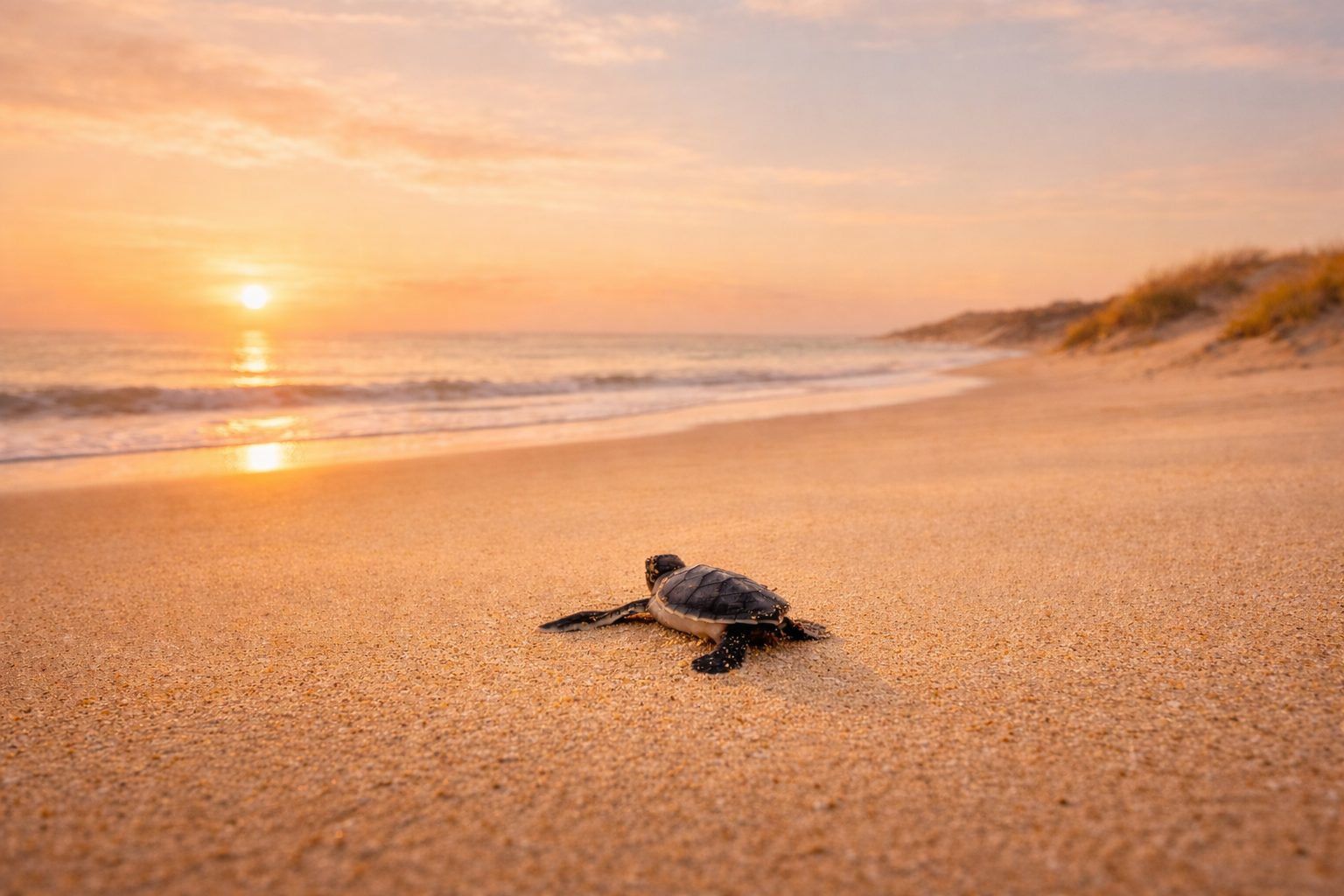
Es gibt Orte, an denen die Natur nicht nur Kulisse ist, sondern Rhythmus.
Die Nordküste Zyperns gehört dazu.
Zwischen offenen Küstenabschnitten, sandigen Dünen und ruhigen Buchten wiederholt sich jedes Jahr ein Zyklus, der seit Jahrhunderten unverändert geblieben ist.
Ein stilles, präzises Zusammenspiel aus Instinkt, Bewegung und Zeit.
Es sind die Wege der Meeresschildkröten.
Eine Reise, die im Verborgenen beginnt
Wenn die Temperaturen steigen und die Abende länger werden, beginnt im Meer eine Bewegung, die von außen kaum sichtbar ist.
Weit draußen im Wasser orientieren sich die Tiere an Strömungen, Gerüchen und einem inneren Kompass, der sie zurück an genau jene Küstenabschnitte führt, an denen ihr eigener Lebensweg einst begann.
Diese Rückkehr ist keine zufällige Entscheidung.
Sie ist Erinnerung.
Und sie führt jedes Jahr wieder an die Strände Nordzyperns.
Die Küsten, die Raum lassen
Nicht jeder Strand eignet sich für diese Rückkehr.
Die Schildkröten wählen Orte, die ruhig geblieben sind:
lange, offene Sandabschnitte
Dünenlandschaften
Küsten ohne dichte Bebauung
geschützte Zonen mit wenig künstlichem Licht
Genau diese Eigenschaften finden sich entlang vieler Abschnitte zwischen Alagadi, Karpaz und den weniger bekannten Buchten der Nordküste.
Hier ist die Nacht noch dunkel genug.
Und die Landschaft ursprünglich genug.
Die Spur im Sand
Wer früh am Morgen einen dieser Strände besucht, entdeckt manchmal eine feine Spur im Sand.
Ein Muster aus Linien, das vom Wasser hinauf zu den Dünen führt – und wieder zurück.
Für viele Besucher ist es ein kurzer Moment.
Für die Natur ist es Teil eines jahrhundertealten Ablaufs.
In der Nacht hat ein Tier den Strand betreten, eine Mulde gegraben, die Eier abgelegt und sich wieder zurückgezogen.
Alles geschieht leise.
Ohne Inszenierung.
Ohne Publikum.
Schutz als Teil der Kultur
In den letzten Jahren haben sich auf Nordzypern verschiedene Initiativen entwickelt, die diese Zyklen bewusst schützen.
Strandabschnitte werden markiert.
Nester dokumentiert.
Besucher informiert.
Dabei geht es nicht darum, die Natur auszustellen, sondern sie zu respektieren.
Diese Haltung prägt auch den Umgang der Einheimischen mit diesen Orten.
Man weiß, dass man Gast ist.
Und verhält sich entsprechend.
Eine andere Form von Begegnung
Begegnungen mit den Schildkröten finden selten direkt statt.
Und vielleicht ist genau das ihre Stärke.
Man sieht keine Show.
Kein Spektakel.
Sondern ein Zeichen.
Eine Spur im Sand.
Ein markierter Bereich in den Dünen.
Ein kleiner Hinweis darauf, dass hier Leben stattfindet, unabhängig vom Menschen.
Für viele entsteht genau daraus eine andere Form von Wertschätzung.
Nicht durch Nähe – sondern durch Distanz.
Natur, die Maßstäbe verschiebt
Wer Zeit in solchen Landschaften verbringt, bemerkt schnell, dass sich der eigene Blick verändert.
Prioritäten verschieben sich.
Geschwindigkeit verliert an Bedeutung.
Wahrnehmung gewinnt an Tiefe.
Orte wie diese zeigen, dass Entwicklung und Natur sich nicht ausschließen müssen – solange Raum bleibt.
Und dieser Raum ist auf Nordzypern noch vorhanden.
Die Bedeutung für einen Standort
In klassischen Standortanalysen spielen Faktoren wie Infrastruktur, Preise oder Wachstum eine Rolle.
Doch es gibt einen weiteren, oft unterschätzten Aspekt:
die Qualität der Umgebung.
Eine Region, in der natürliche Prozesse weiterhin stattfinden können, in der Küsten nicht vollständig überbaut sind und in der ökologische Zyklen respektiert werden, entwickelt eine andere Form von Stabilität.
Nicht laut.
Aber nachhaltig.
Ein stilles Zeichen von Kontinuität
Die Wege der Meeresschildkröten sind kein touristisches Highlight im klassischen Sinn.
Sie sind ein leises Zeichen.
Dafür, dass eine Landschaft ihre ursprüngliche Funktion behalten hat.
Dafür, dass Zyklen fortbestehen.
Und dafür, dass nicht alles beschleunigt werden muss.
Zwischen Meer und Dünen
Wenn man am frühen Morgen an einem dieser Strände steht, das Meer ruhig ist und die Luft noch kühl, entsteht ein Moment, der sich nicht planen lässt.
Ein Moment, in dem man spürt, dass dieser Ort nicht nur Raum für Menschen bietet – sondern für Leben insgesamt.
Und vielleicht ist genau das einer der Gründe, warum Nordzypern für viele mehr ist als eine Destination.
Es ist ein Ort, an dem sich Gegenwart und Natur noch im Gleichgewicht befinden.
Zwischen Meer und Dünen.
Zwischen Bewegung und Stille.
Zwischen einem Fußabdruck im Sand – und einer Spur, die seit Generationen zurückkehrt.