

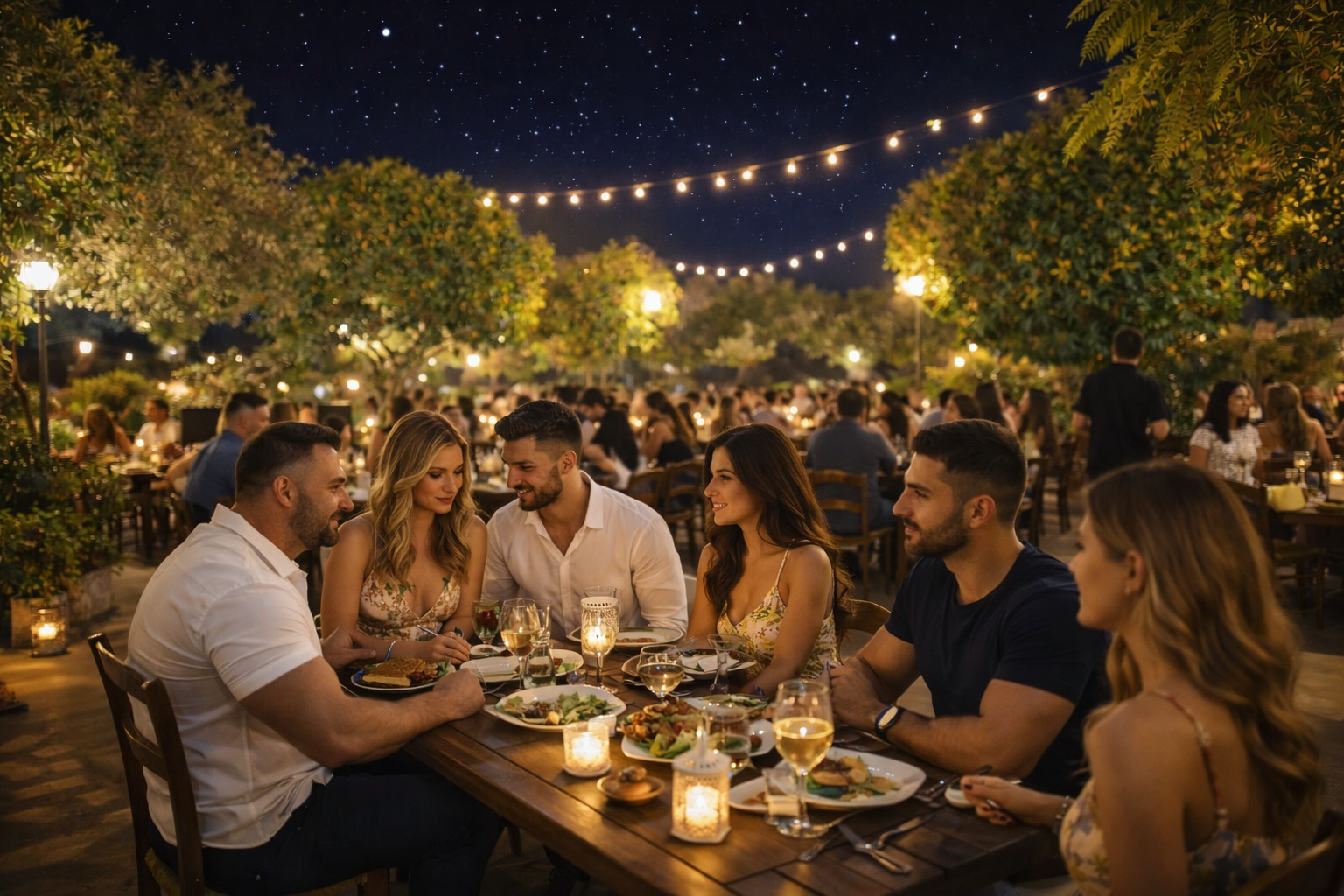
Es gibt Orte, an denen Essen nicht nur Nahrungsaufnahme ist.
Sondern Begegnung.
Zeit.
Atmosphäre.
Auf Nordzypern gehört das gemeinsame Essen zu diesen Momenten, die den Charakter einer Region prägen – leise, unaufdringlich und gleichzeitig tief verankert.
Es beginnt nicht mit einer Reservierung.
Sondern mit einem Tisch.
Der Tisch als Mittelpunkt
In den Tavernen der Insel ist der Tisch mehr als ein Möbelstück.
Er ist Zentrum.
Hier werden Geschichten erzählt, Entscheidungen getroffen, Freundschaften vertieft.
Nicht in Hektik – sondern in einem Rhythmus, der sich von selbst ergibt.
Die Teller kommen nacheinander.
Gespräche entwickeln sich.
Und der Abend hat kein klares Ende.
Man bleibt, solange es sich richtig anfühlt.
Eine Küche, die verbindet
Die zyprische Küche ist geprägt von Einfachheit – und genau darin liegt ihre Qualität.
Frische Zutaten.
Klare Aromen.
Rezepte, die über Generationen weitergegeben wurden.
Halloumi vom Grill.
Olivenöl, das nach Sonne schmeckt.
Gerichte wie Molehiya, die nur hier ihre ursprüngliche Bedeutung behalten haben.
Es geht nicht um Inszenierung.
Es geht um Authentizität.
Und diese Authentizität spürt man bei jedem Bissen.
Zwischen Innenhof und Meerblick
Die schönsten Tavernen liegen oft nicht an den lautesten Orten.
Sondern:
in kleinen Gassen
in Innenhöfen
auf Terrassen mit Blick auf das Meer
oder am Rand eines Dorfplatzes
Holzstühle, Steinmauern, Lichterketten, die am Abend langsam angehen.
Die Umgebung wirkt nicht gestaltet – sondern gewachsen.
Und genau deshalb fühlt sie sich echt an.
Gespräche ohne Agenda
In vielen internationalen Städten sind Abendessen oft Teil eines klaren Plans:
Treffen.
Besprechen.
Gehen.
Auf Nordzypern verlaufen diese Abende anders.
Gespräche entstehen nicht aus einem Ziel heraus, sondern aus dem Moment.
Man sitzt nebeneinander, teilt Speisen, tauscht Gedanken aus – und merkt oft erst später, wie wertvoll dieser Austausch war.
Gerade für Unternehmer und internationale Gäste entsteht hier eine Qualität von Begegnung, die nicht inszeniert ist.
Und genau deshalb nachhaltig bleibt.
Die Rolle der Zeit
Zeit verhält sich in Tavernen anders.
Sie dehnt sich.
Es gibt keinen Druck, den Tisch freizumachen.
Kein Gefühl, weiter zu müssen.
Kein hastiges Abräumen.
Ein Abend kann zwei Stunden dauern.
Oder vier.
Und oft merkt man gar nicht, wie schnell er vergangen ist.
In einer Welt, die von Geschwindigkeit geprägt ist, wird genau das zu einem neuen Luxus.
Kulinarik als Teil der Identität
Die Tavernen-Kultur ist nicht nur ein gastronomisches Konzept.
Sie ist Teil der Identität der Insel.
Sie verbindet:
mediterrane Einflüsse
türkische Küche
lokale Traditionen
und internationale Offenheit
Diese Mischung spiegelt sich nicht nur im Essen wider, sondern auch im Publikum.
An einem Tisch sitzen Einheimische.
Am nächsten internationale Gäste.
Und oft entsteht zwischen beiden ganz selbstverständlich ein Gespräch.
Vom Essen zur Erinnerung
Viele Besucher erinnern sich nach ihrem Aufenthalt nicht zuerst an konkrete Objekte oder Projekte.
Sondern an einen Abend.
Ein Tisch.
Ein Glas Wein.
Ein Gespräch.
Ein Moment, in dem alles zusammenpasst.
Genau darin liegt die Stärke dieser Kultur.
Sie schafft Erinnerungen, die bleiben.
Ein leiser Luxus
In einer Zeit, in der Gastronomie oft über Trends, Konzepte und Inszenierung definiert wird, wirkt die Tavernen-Kultur fast still.
Und genau darin liegt ihr Wert.
Luxus bedeutet hier nicht:
mehr Auswahl
mehr Geschwindigkeit
mehr Spektakel
sondern:
mehr Zeit
mehr Nähe
mehr Echtheit
Warum gemeinsames Essen hier mehr bedeutet
Weil es nicht nur um das Essen geht.
Sondern um das, was zwischen den Gängen passiert.
Die Gespräche.
Die Pausen.
Die Blicke.
Die Ruhe.
In diesen Momenten zeigt sich eine Qualität von Leben, die sich nicht planen lässt – sondern entsteht.
Und vielleicht ist genau das der Grund, warum so viele Menschen, die Zeit auf Nordzypern verbringen, immer wieder zu diesen Tischen zurückkehren.
Nicht wegen eines Gerichts.
Sondern wegen eines Gefühls.