

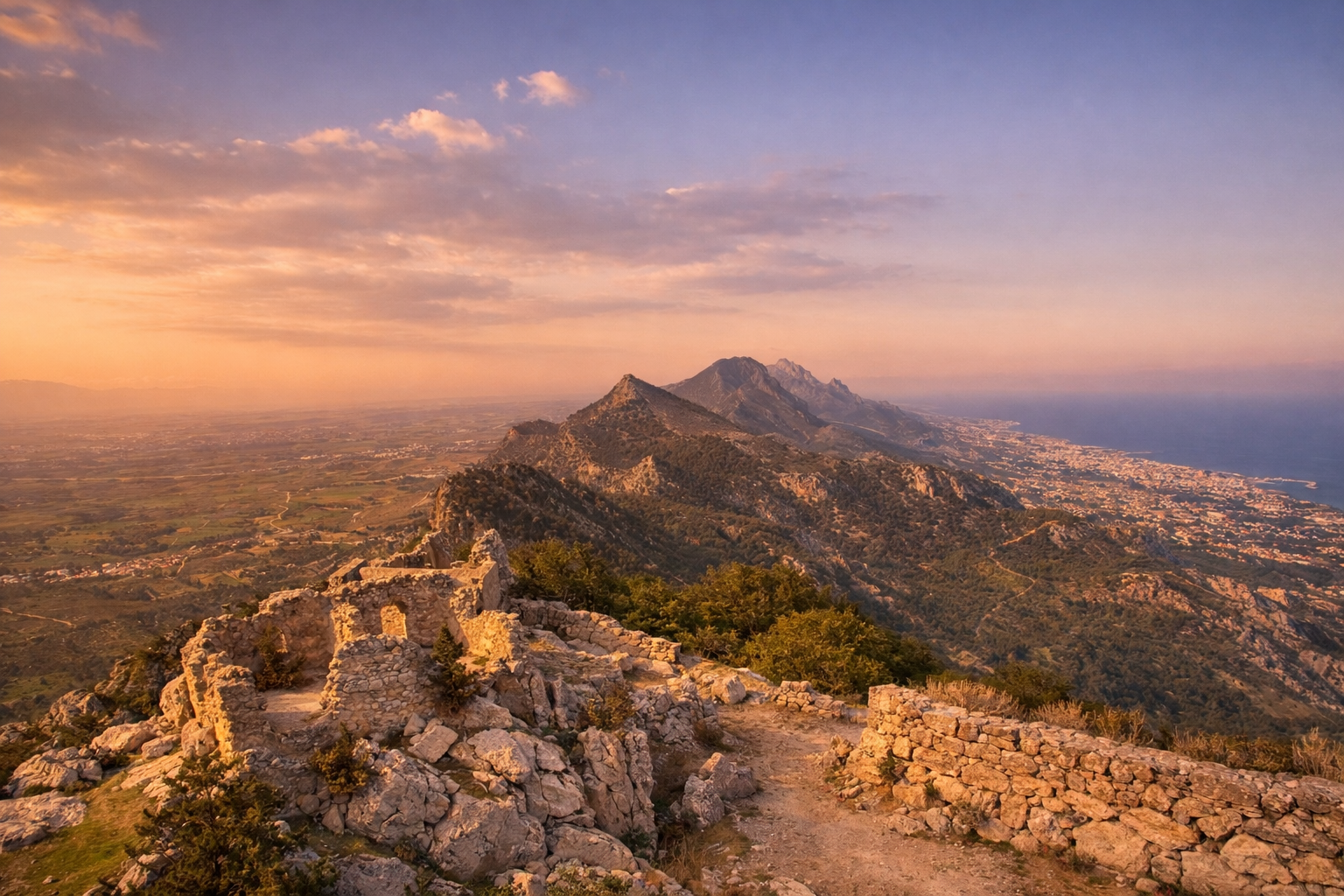
Manche Landschaften brauchen keine Handlung.
Sie tragen sie bereits in sich.
Nordzypern gehört zu diesen seltenen Orten, an denen Bilder entstehen, noch bevor jemand eine Kamera aufstellt. Zwischen Bergen, Burgen, Küstenlinien und modernen Resorts liegt eine Vielfalt, die wie gemacht wirkt für Geschichten – für Spannung, für Eleganz, für Fantasie.
Eine Insel, die nicht versucht, etwas zu sein.
Und genau deshalb alles sein könnte.
Eleganz, Gefahr und die Kunst des Unausgesprochenen
Am Abend, wenn die Küste von Girne leiser wird und das Meer dunkler, verändern sich Räume.
Hotel-Lobbys bekommen Tiefe.
Bars werden zu Bühnen.
Korridore wirken plötzlich wie Übergänge zwischen zwei Entscheidungen.
Es ist diese Ästhetik, die man aus James Bond kennt: elegante Orte, in denen nicht alles gesagt werden muss, um verstanden zu werden. Doch Nordzypern trägt auch jene moderne Spannung in sich, wie man sie aus stilisierten Welten à la John Wick erkennt – weniger laut, dafür präziser. Nicht das Spektakel steht im Vordergrund, sondern der Rahmen: Licht, Material, Haltung.
Und dann gibt es die zweite Ebene: das Spiel.
Casinos, Lounges, diskrete Gespräche am Rand eines Pools – Settings, die sich anfühlen, als könnten sie jederzeit zur Kulisse eines Plans werden. Genau diese Atmosphäre ist es, die man aus Ocean’s Eleven kennt: alles wirkt leicht, elegant – und doch läuft im Hintergrund eine zweite Geschichte.
Resort Noir – mediterrane Schönheit mit Schatten
In vielen Szenen großer Serien und Filme liegt Spannung nicht in Action, sondern im Gegensatz: Schönheit und Unruhe, Sonne und Schatten.
Nordzypern kann genau das.
Ein Resort am Meer, ein perfekt gedeckter Tisch, ein Lächeln, das zu lange hält. Eine Stimmung, die an The White Lotus erinnert – nicht weil es gleich ist, sondern weil die Insel ähnliche Räume liefert: Orte, die luxuriös wirken, aber menschlich bleiben. Wo unter dem Gespräch manchmal mehr liegt als im Gespräch selbst.
Wer es noch kühler mag, erkennt hier auch den Ton von The Night Manager: mediterranes Licht, internationale Gäste, scheinbar harmlose Begegnungen, die plötzlich Gewicht bekommen.
Ein Ensemble, ein Ort, ein Geheimnis
Es gibt eine besondere Art Film, die nur funktioniert, wenn ein Ort stark genug ist, alles zusammenzuhalten: Menschen, Konflikte, Widersprüche.
Die Insel bietet dafür perfekte Räume.
Private Villen, moderne Anlagen, Terrassen mit Meerblick, Innenhöfe, in denen Stimmen widerhallen – wie Settings aus Glass Onion / Knives Out. Nicht, weil Nordzypern so inszeniert ist, sondern weil die Architektur und die Weite genau dieses Gefühl tragen: Ein Ort, an dem jeder ankommt – und jeder etwas verbirgt.
Burgen, Berge – und ein Hauch Magie
Hinter der Küste erhebt sich die Bergkette, die wie ein zweiter Horizont wirkt. Oben liegen Burgen wie St. Hilarion oder Buffavento – Orte, die sich in Felsen und Nebel verlieren.
Schmale Wege, alte Mauern, versteckte Terrassen mit Blick über das Meer.
Das ist die Art Landschaft, die sofort eine andere Welt öffnet. Eine Welt, wie sie in Geschichten wie Harry Potter existieren könnte: geheimnisvoll, zeitlos, fast magisch. Hier braucht es keine Kulisse – die Kulisse ist bereits da.
Wenn die Sonne untergeht, verändert sich die Atmosphäre dieser Orte erneut.
Die Burgen, die am Tag offen und historisch wirken, bekommen im Abendlicht eine andere Tiefe. Schatten wandern über Mauern, Lichter gehen in der Ferne an, und die Stille wird dichter.
Es ist die Art von Stimmung, die man aus Serien wie The Vampire Diaries kennt – Orte, die tagsüber greifbar sind, aber nachts eine zweite Ebene öffnen. Geheimnisse, die nicht ausgesprochen werden, und Geschichten, die im Hintergrund weiterleben.
Machtgespräche im Abendlicht
Nicht jede Geschichte ist Fantasy oder Thriller. Manche Geschichten sind leiser – und gerade deshalb gefährlicher.
Eine Terrasse.
Ein Glas.
Ein Gespräch, das nach Small Talk klingt, aber eigentlich über Macht spricht.
Nordzypern hat diese Orte: Bars, private Dinner-Spots, Hotelrestaurants, in denen man nicht nur isst, sondern beobachtet. Das ist die Energie, die man aus Succession kennt – nicht als Kopie, sondern als Gefühl: Entscheidungen fallen nicht immer im Konferenzraum. Manchmal fallen sie dort, wo das Meer ruhig ist und niemand zuhört.
Bewegung, Übergänge und schnelle Kontraste
Nordzypern ist keine monotone Landschaft. Auf engem Raum wechseln sich Küste, Berge, Stadt und offene Natur ab.
Genau diese Vielfalt macht sie auch für dynamische Erzählungen interessant – mit Szenenwechseln, die sich wie Mission: Impossible anfühlen könnten: Serpentinen in den Bergen, schnelle Ortswechsel, Häfen, Festungen, Mauern.
Und dann die andere Art Spannung: weniger spektakulär, dafür nervöser, urbaner. Übergänge, Nebenstraßen, Grenzlinien. Hier liegt eine Bildwelt, die sich anfühlt wie Bourne – nicht wegen Verfolgungsjagden, sondern wegen Atmosphäre: Bewegung, Identität, das Gefühl, dass Orte manchmal mehr wissen als Menschen.
Weite, Stille und das Unverfälschte
Und schließlich gibt es die Seite der Insel, die kaum Worte braucht.
Karpaz.
Weite Strände.
Natur, die nicht inszeniert ist.
Meeresschildkröten, die ihre Wege gehen, ohne Publikum.
Hier entstehen Bilder, die für ruhige Produktionen funktionieren: dokumentarisch, poetisch, reduziert. Nordzypern kann laut sein – aber es kann auch eine Leinwand sein, auf der Stille die Hauptrolle spielt.