

Warum eines der ältesten Bauwerke Nikosias heute wieder ein lebendiger Treffpunkt ist
Manche Gebäude werden zu Museen.
Andere bleiben Teil des Lebens.
Der Büyük Han in Nikosia gehört zur zweiten Kategorie. Er ist eines der ältesten erhaltenen Bauwerke der Stadt — und gleichzeitig ein Ort, an dem sich Gegenwart und Vergangenheit selbstverständlich begegnen.
Ein Bauwerk mit Funktion
Der Büyük Han wurde im 16. Jahrhundert während der osmanischen Zeit errichtet. Seine ursprüngliche Funktion war klar definiert: ein Karawanserei — ein Gasthaus für Händler, Reisende und Tiere, die entlang der Handelsrouten durch Zypern zogen.
Die Architektur folgte diesem Zweck:
ein geschlossener Innenhof
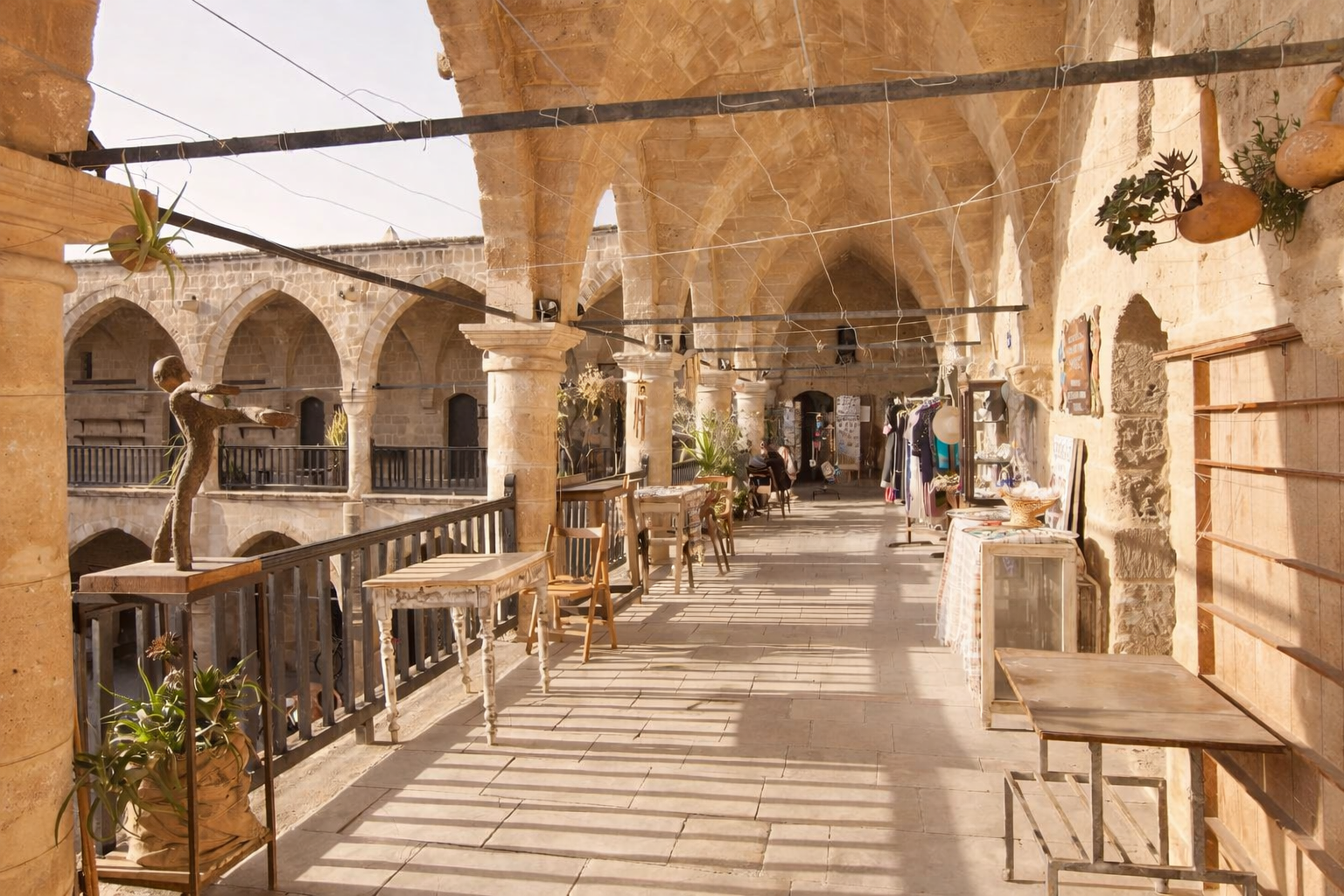
zweigeschossige Arkaden
Räume für Übernachtung und Lagerung
ein zentraler Brunnen
Alles war auf Bewegung, Handel und Aufenthalt ausgelegt.
Was bemerkenswert ist: Diese Grundidee ist bis heute spürbar.
Architektur als Rahmen für Begegnung
Der Innenhof bildet das Herz des Büyük Han.
Ein offener Raum, umgeben von gleichmäßigen Bögen, Stein, Schatten und Licht. Die Geometrie wirkt ruhig, fast symmetrisch — und genau diese Ruhe macht den Ort besonders.
Man sitzt hier nicht in einem klassischen Restaurant.
Man befindet sich in einem historischen Raum, der über Jahrhunderte genutzt wurde und nun eine neue Funktion übernommen hat.
Der Übergang zwischen Vergangenheit und Gegenwart geschieht unaufgeregt.
Heute: Cafés, Kunst und kleine Werkstätten
Nach sorgfältiger Restaurierung wurde der Büyük Han in den letzten Jahren wiederbelebt.
Heute findet man dort:
kleine Cafés und Restaurants
Kunsthandwerk und Galerien
lokale Künstler und Werkstätten
Souvenirs mit handwerklichem Charakter
ruhige Sitzplätze im Innenhof
Es ist kein kommerzielles Zentrum im klassischen Sinn.
Es ist ein kultureller Treffpunkt.
Besucher, Einheimische, Künstler und Unternehmer bewegen sich selbstverständlich im selben Raum. Gespräche entstehen beiläufig, oft ohne Ziel — einfach, weil der Ort sie ermöglicht.
Ein Ort mit eigenem Rhythmus
Im Laufe des Tages verändert sich die Atmosphäre.
Am Vormittag ist es ruhig. Händler öffnen langsam ihre Läden, erste Besucher kommen, Kaffee wird serviert.
Am Nachmittag füllt sich der Innenhof, Stimmen werden lebendiger, Gespräche intensiver.
Am Abend entsteht eine fast intime Stimmung: warmes Licht, ruhige Musik, Menschen, die sitzen, reden, bleiben.
Der Büyük Han funktioniert nicht nach festen Programmen.
Er entwickelt seinen Rhythmus selbst.
Kunst als Teil des Alltags
Ein wesentlicher Bestandteil des heutigen Büyük Han ist die lokale Kunstszene.
Viele der kleinen Räume rund um den Innenhof werden von Künstlern genutzt:
Malerei
Keramik
Textilkunst
Schmuckdesign
Holzarbeiten
Die Werke sind nicht hinter Glas isoliert, sondern Teil des Raums. Man kann sie sehen, anfassen, mit den Künstlern sprechen.
Kunst wird hier nicht inszeniert — sie ist präsent.
Zwischen Tourismus und Authentizität
Der Büyük Han ist bekannt.
Aber er wirkt nicht touristisch im klassischen Sinn.
Warum?
Weil seine Nutzung organisch ist.
Er wurde nicht neu gebaut, um Besucher anzuziehen.
Er wurde wiederbelebt, um genutzt zu werden.
Diese Differenz ist spürbar.
Sie verleiht dem Ort Glaubwürdigkeit.
Bedeutung für das Stadtbild
Für Nikosia hat der Büyük Han eine besondere Rolle.
Er zeigt, wie historische Strukturen nicht konserviert, sondern integriert werden können. Statt Vergangenheit zu isolieren, wird sie in den Alltag eingebunden.
Das schafft eine andere Qualität von Stadtentwicklung:
respektvoll gegenüber Geschichte
offen für Gegenwart
funktional für die Zukunft
Ein Ort für Gespräche
Interessant ist, wie oft im Büyük Han Gespräche entstehen, die über den Moment hinausgehen.
Man trifft sich hier nicht nur zufällig.
Man verabredet sich bewusst.
Für Kaffee.
Für ein Meeting.
Für ein erstes Kennenlernen.
Der Ort bietet dafür genau die richtige Balance: öffentlich, aber nicht laut. historisch, aber nicht starr.
Perspektive für internationale Besucher
Für internationale Gäste, Investoren oder Unternehmer, die die Insel kennenlernen möchten, ist der Büyük Han ein wichtiger Referenzpunkt.
Er zeigt:
wie Geschichte bewahrt wird
wie Kultur im Alltag integriert ist
wie soziale Räume funktionieren
Ein Standort besteht nicht nur aus Projekten und Infrastruktur, sondern aus Orten, die Begegnung ermöglichen.
Der Büyük Han ist genau so ein Ort.